The arithmetic has one answer per volume; the choice of volume is yours. What do you mix a 10 mg retatrutide vial with, and why that amount: easier syringe marks, a smaller injection, something else?
Weight Loss Peptides · 9 replies · 487 viewsRules+ Start a thread
Retatrutide: 1, 2 or 3 mL of BAC water — what do you use, and why?
Weight Loss Peptides9 replies · 487 views · last reply Jump to latest ↓
Lab data
Retatrutide
- 1,563 published lab tests
- Median purity 99.8% across 1,561 purity-tested vials
- 0% came in below 95% purity
- In stock at $3.00–$21.00/mg across 25 shops (vial listings)
Live figures from the index · newest verified test
9 replies
Sort: Oldest firstThe concentration is simple division: a 10 mg vial with 1 mL of bacteriostatic water is 10 mg/mL, with 2 mL it's 5 mg/mL, and with 3 mL about 3.3 mg/mL. More water spreads each milligram over more of the syringe, so small amounts are easier to measure and each injection is a larger volume. The number of draws in the vial doesn't change.
For the syringe marks, use the Retatrutide calculator, or the BAC Water Calculator for any vial size. Peptigrity doesn't recommend a dose: the calculators do the arithmetic on a figure you already have, and the doses retatrutide's trials used are listed against each trial on the Retatrutide guide.
One more variable is the vial itself. The median retatrutide vial on file measured 110% of its label claim (verified September 2026, Retatrutide lab tests). If your vial holds more or less than 10 mg, every mark on the syringe shifts with it.
Interesting discussion. The key point is that concentration and total quantity are different measurements: changing the volume of liquid changes the concentration, but it doesn't change the amount of peptide originally in the vial. Accurate calculations also depend on the actual contents matching the label, so product documentation and independently verified testing are important considerations. It's worth remembering that a purity result alone doesn't establish the correct quantity, sterility, or suitability for human use. Retatrutide remains investigational, so people should avoid treating online mixing advice or community calculations as a substitute for appropriate medical guidance. For more educational resources on peptides and research developments.
#4–#6 · @alexm89, @multicast and 1 other · –
The 110% label claim thing is the part I'd worry about more than the volume. If the vial actually holds 11 mg then 1 mL gets you 11 mg/mL not 10, and every mark is off by the same 10% no matter how carefully you draw. Same as a flow meter reading 10% low. Precise and wrong.
On the volume itself it mostly comes down to syringe resolution. On a U-100 insulin syringe one unit is 0.01 mL, so at 10 mg/mL each tick is 0.1 mg and at 5 mg/mL it's 0.05 mg. More water means each tick moves less peptide, which makes small amounts easier to hit. Cost is a bigger injection volume.
A
One thing to consider with Reta is that to get it to go "clear' you really need to do 1ML per 10mg. Doing less than that will usually result in not all of the Reta going into suspension. It's not a big deal if that happens as Bac water is just a transport mechanism to get it into your body and any undissolved Reta will still be absorbed just fine.
For example you'll never get a 60mg 3mL vial to go totally "clear" it's simply not possible to get that much Reta to completely dissolve with only 3mL of Bac.
PA
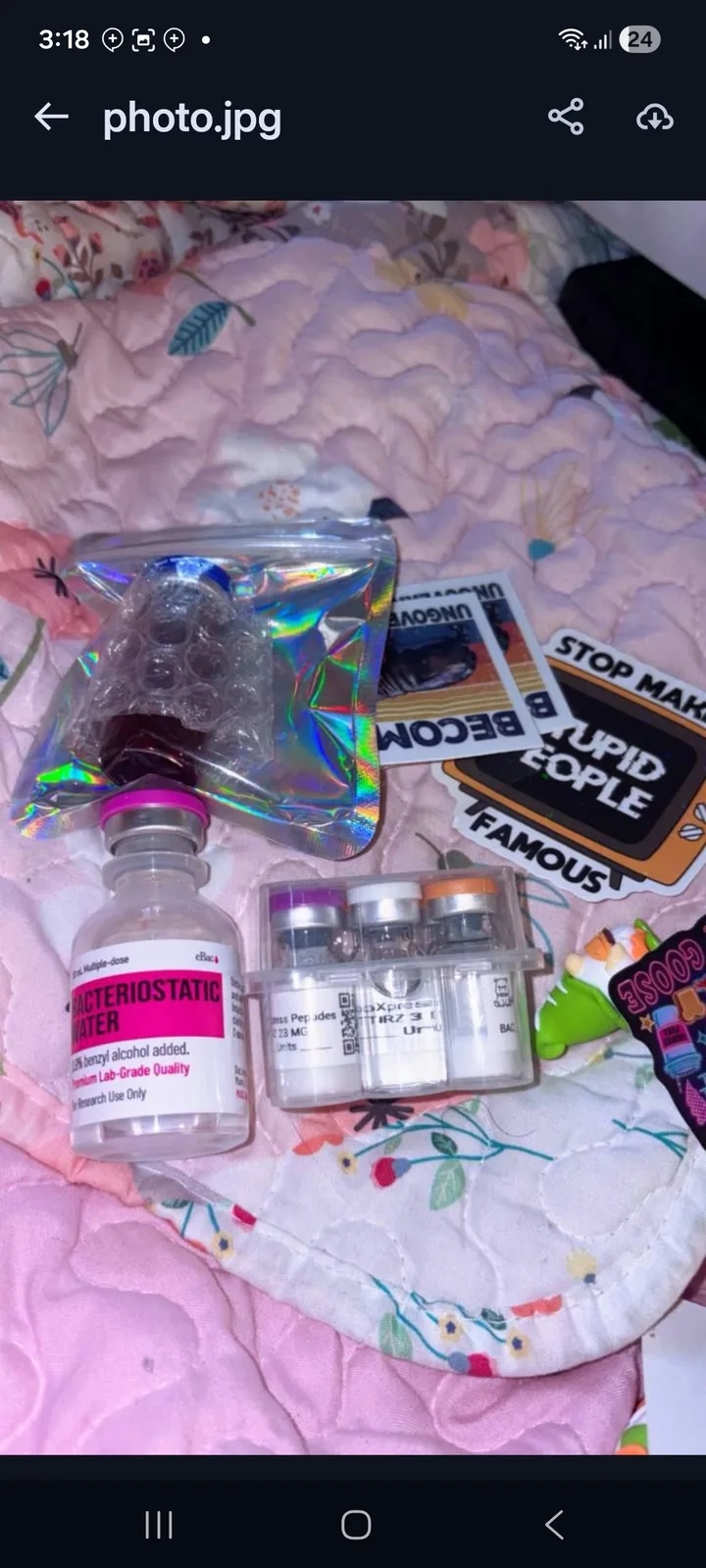
For a 10 mg vial, **2 mL of BAC water (5.0 mg/mL, or 50 mcg per U-100 unit)* is the cleanest practical middle ground across a full titration range:
- Why 1 mL (
10 mg/mL) gets finicky at low aliquots:** A0.5 mgstarting aliquot is only **5 units (0.05 mL)** on a U-100 syringe. At that tiny volume, a half-unit meniscus misread or tiny air bubble shifts your aliquot by 10–20%, and syringe hub dead-space eats a noticeable share of the vial over multiple draws. - Why 2 mL (
5 mg/mL) hits the sweet spot:**0.5 mg= 10 units,1 mg= 20 units,2 mg= 40 units, and even a4 mgaliquot stays at **80 units (0.80 mL)** — crisp major tick marks on a standard U-100 barrel without ever exceeding a single 1 mL syringe draw. - When 3 mL (
3.33 mg/mL) makes more sense:** Best saved for daily micro-aliquot research (like 250–500 mcg BPC-157 / TB-500 protocols, where 7.5–15 units is much easier to read accurately), whereas on a 10 mg GLP-1 vial, 3 mL pushes a 4 mg aliquot to1.20 mL(120 units) and forces two separate draws.
The "1 mL per 10 mg" answers most of it, but it's worth saying why that's a default rather than the answer: the volume only sets your syringe resolution, so the right amount depends on how small a dose you're measuring.
At 10 mg in 1 mL (10 mg/mL), 1 mg is 10 units on a U-100 — easy. But if you're titrating in small steps, 2 mL (5 mg/mL, 20 units per mg) doubles the marks you have to work with, so a half-unit slip matters half as much. That's the whole trade-off: more water = finer resolution and a slightly bigger volume; less = tiny marks.
The solubility point raised above is the real constraint at the top end — push the concentration high enough (a 60 mg vial in very little water) and reta can be slow to go fully clear. If it's hazy, gentle warmth and time usually finish it rather than more shaking.
And tying it back to the 110% figure up top: if a vial actually holds more than its label, your real mg/mL is higher than your arithmetic assumes, so every draw runs slightly over. One more reason to pick a round, generous volume — it keeps the numbers forgiving.
↳Replying to the threadRetatrutide: 1, 2 or 3 mL of BAC water — what do you use, and why? · started by @Peptigrity
18+ · name the compound, not a product brand · store links and codes go on shop boardsSign in when you post · takes a few seconds
Own question? Start a thread →
Related threads
Weight Loss Peptides · Retatrutide
Retatrutide cap colors: post your cap, lot number and lab resultWeight Loss Peptides · Retatrutide
Retatrutide: lab tests, cost, experiences — start hereShop Talk · Retatrutide
Lilly just went to war with gray market reta. here's what we think happens next - screenshot this, we'll grade it in februaryWeight Loss Peptides · Retatrutide
The retatrutide trial numbers aren't what you're buyingRetatrutide: 1, 2 or 3 mL of BAC water — what do you use, and why?Weight Loss Peptides · 9 replies